The National Ukrainian Youth Association (NUMO) has released the second episode of its video podcast «Numo bez bar’ieriv» («NUMO Without Barriers»). This time, the team explores the principle of human-centeredness through the example of the Nat coworking space in Lviv and the Radio SKOVORODA studio. The episode is now available to watch.
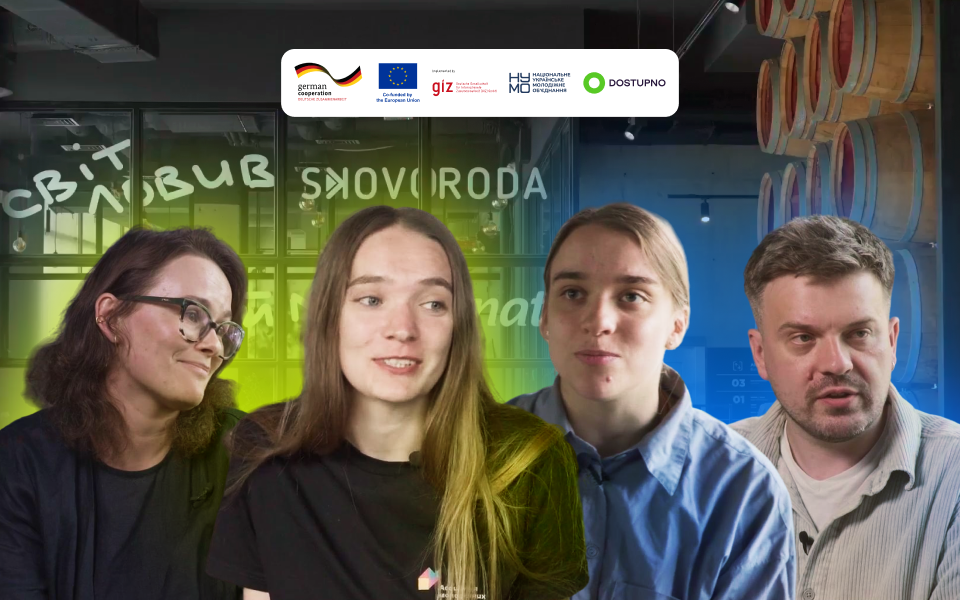
The episode focuses on practical cases of implementing inclusivity in work and media environments. The project team demonstrates how modern organizations apply the human-centered approach through concrete solutions and everyday practices.
Barrier-Free Is More Than Just Architecture
Anastasiia Kyryievska, CEO of the coworking space, explains the philosophy behind the project:
«People are at the center of everything that happens here — all people. We want everyone to feel comfortable. A workspace is not about walls, but about the people who work there.»
Radio SKOVORODA co-founder Artem Haletskyiy notes that the team deliberately chose an inclusive approach to content creation, incorporating subtitles, sign language interpretation, and content in two languages. While this requires additional resources, it makes their content accessible to a much wider audience.
Sofiia Levandovska, communications manager at the inclusive studio Lady Dee, highlights the many forms barriers can take:
«People face barriers not only in architecture, but also in access to education or employment. Even after finding a job, another question arises — how to get there. During the full-scale war, this has become even more difficult, especially for people who use wheelchairs. Reaching shelters during nighttime shelling can be extremely challenging, which directly affects their basic sense of security.»
Why It Matters
Anna-Mariia Mykhailiuk, head of the Association of Youth Centers of Ukraine, emphasizes the connection between accessibility and youth policy. Systemic changes help remove barriers, and today’s youth must be attentive to the needs of others and actively work to transform their environment.
Accessibility is not a trend, but a core characteristic of a democratic society. Ukrainian youth have the right to live and work in environments where everyone can realize their potential.
You can watch the second episode on YouTube.